
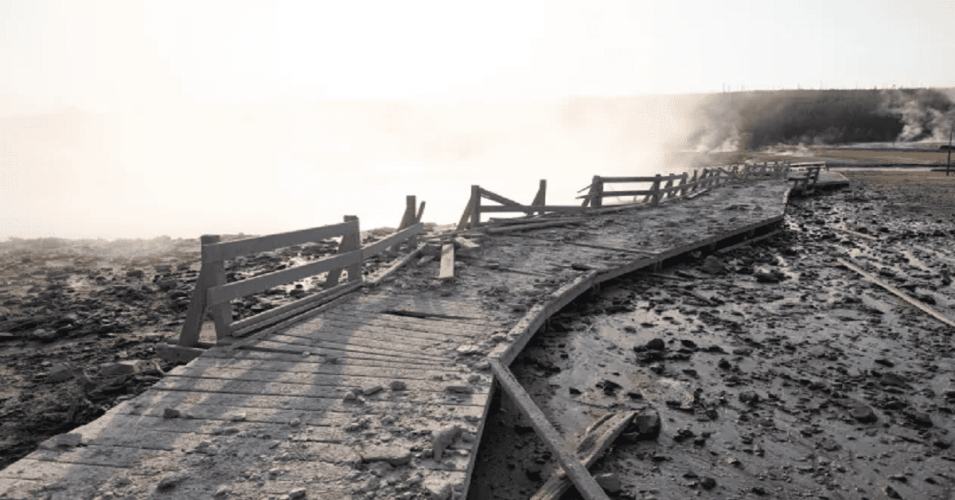
A hydrothermal explosion is one of the most powerful natural geological events that can occur in volcanic and geothermal regions. Unlike a volcanic eruption that involves magma reaching the Earth's surface, a hydrothermal explosion happens when underground water suddenly turns into steam due to extreme heat. The rapid expansion creates immense pressure, causing rocks, soil, and debris to explode outward.
Understanding a hydrothermal explosion is important because these events can occur with little warning and have the potential to cause significant damage to landscapes, infrastructure, and human life. Famous geothermal areas around the world, including Yellowstone National Park, have experienced hydrothermal explosion events throughout history.
This article explores what a hydrothermal explosion is, how it occurs, its causes, effects, examples, risks, and the science behind these dramatic geological phenomena.
What Is a Hydrothermal Explosion?
A hydrothermal explosion occurs when hot water trapped beneath the Earth's surface rapidly converts into steam. Since steam occupies far more volume than liquid water, the sudden expansion generates tremendous pressure.
When this pressure exceeds the strength of the surrounding rocks, the ground can rupture violently, ejecting rock fragments, mud, water, and steam into the air. Unlike traditional volcanic eruptions, magma does not necessarily reach the surface during a hydrothermal explosion.
These explosions are commonly associated with:
- Geothermal fields
- Geyser basins
- Hot spring systems
- Volcanic regions
- Areas with underground heat sources
The energy released during a hydrothermal explosion can create large craters and alter the surrounding landscape dramatically.
The Science Behind a Hydrothermal Explosion
To understand a hydrothermal explosion, it helps to examine the relationship between heat, water, and pressure underground.
Deep beneath geothermal regions, groundwater seeps through cracks and porous rocks. As this water approaches heat sources such as magma chambers or hot rock formations, temperatures rise significantly.
Under high pressure, water can remain liquid even when heated above its normal boiling point. This condition is known as superheating.
If the pressure suddenly decreases due to:
- Rock fractures
- Earthquakes
- Landslides
- Changes in groundwater levels
The superheated water instantly converts into steam.
Because steam occupies approximately 1,700 times more volume than liquid water, the expansion can trigger a violent hydrothermal explosion.
Main Causes of Hydrothermal Explosion
Several geological factors contribute to the development of a hydrothermal explosion.
Superheated Groundwater
The most critical ingredient is groundwater heated beyond its normal boiling point.
When trapped beneath impermeable rock layers, water can accumulate enormous pressure while remaining liquid.
Magmatic Heat Sources
Volcanic regions often contain magma reservoirs beneath the surface. These reservoirs continuously heat surrounding groundwater systems.
Even if magma never reaches the surface, it can provide enough energy to trigger a hydrothermal explosion.
Pressure Changes
Sudden reductions in underground pressure are among the most common triggers.
Pressure changes may result from:
- Ground cracking
- Fault movement
- Earthquakes
- Erosion
- Natural drainage shifts
Sealed Hydrothermal Systems
Some geothermal systems become sealed over time due to mineral deposits.
As water continues heating inside these confined spaces, pressure builds until the surrounding rocks fail catastrophically.
Stages of a Hydrothermal Explosion
The development of a hydrothermal explosion generally follows several stages.
Stage 1: Water Accumulation
Groundwater collects in underground reservoirs and fractures.
Stage 2: Heating
Heat from magma or hot rocks increases water temperatures.
Stage 3: Pressure Build-Up
Confining rock layers trap the heated water, allowing pressure to rise.
Stage 4: Trigger Event
A geological disturbance reduces pressure or weakens surrounding rocks.
Stage 5: Steam Expansion
Superheated water rapidly flashes into steam.
Stage 6: Explosion
The expanding steam blasts rock, mud, and debris outward, creating a crater and releasing large amounts of energy.
Difference Between Hydrothermal Explosion and Volcanic Eruption
Many people confuse a hydrothermal explosion with a volcanic eruption, but the two events differ significantly.
Hydrothermal Explosion
- Driven by steam pressure
- Involves underground water
- Magma usually stays underground
- Can occur suddenly
- Produces steam, mud, and rock debris
Volcanic Eruption
- Driven by rising magma
- Releases lava and volcanic gases
- Often accompanied by ash clouds
- Usually linked directly to magma movement
- Can last for extended periods
A hydrothermal explosion is essentially a steam-driven event rather than a magma-driven one.
Where Hydrothermal Explosions Occur
Hydrothermal explosion events are most common in regions with active geothermal systems.
Yellowstone National Park
Yellowstone is perhaps the most famous location associated with hydrothermal explosion activity.
The park contains:
- Thousands of hot springs
- Numerous geysers
- Extensive geothermal systems
Scientists have identified many ancient explosion craters throughout Yellowstone, some measuring several kilometers in diameter.
New Zealand
The Taupo Volcanic Zone is known for frequent geothermal activity and occasional hydrothermal explosion events.
Iceland
Iceland's volcanic and geothermal landscapes create ideal conditions for hydrothermal explosions.
Japan
Numerous geothermal fields in Japan have experienced steam-driven explosions.
Indonesia
Active volcanic systems make Indonesia particularly vulnerable to hydrothermal explosion events.
Hydrothermal Explosion at Yellowstone
Yellowstone National Park provides one of the best examples of hydrothermal explosion processes.
The park sits above a massive volcanic hotspot. Heat from the underlying magma system powers numerous geothermal features.
Researchers have discovered evidence of multiple large hydrothermal explosion events over thousands of years.
Some ancient Yellowstone hydrothermal explosion craters are among the largest known on Earth.
These explosions have shaped much of the park's modern landscape.
Scientists continue monitoring Yellowstone's geothermal systems to better understand future hydrothermal explosion risks.
Signs That a Hydrothermal Explosion May Be Imminent
Predicting a hydrothermal explosion remains challenging.
However, scientists monitor several warning signs.
Increased Ground Temperature
Rising surface temperatures may indicate changes in underground heat flow.
Enhanced Steam Emissions
More vigorous steam release can signal pressure buildup.
Ground Deformation
Bulging or sinking ground may suggest changes within hydrothermal systems.
Earthquake Activity
Small earthquakes can alter underground pressure conditions.
Changes in Hot Springs
Variations in water levels, temperatures, or chemical composition may indicate instability.
Despite these indicators, a hydrothermal explosion can still occur with little warning.
Hazards Associated With Hydrothermal Explosion
A hydrothermal explosion poses numerous dangers.
Flying Rocks
Explosions can launch large rock fragments hundreds of meters away.
Extreme Temperatures
Boiling water and steam can cause severe burns.
Crater Formation
Large explosions can create deep craters and alter landscapes.
Infrastructure Damage
Roads, buildings, pipelines, and tourist facilities may be damaged.
Human Casualties
People near explosion sites face serious injury risks.
Environmental Impacts
Vegetation and wildlife habitats can be destroyed by a hydrothermal explosion.
Historical Hydrothermal Explosion Events
Several significant hydrothermal explosion events have been documented throughout history.
Yellowstone Events
Yellowstone has experienced multiple hydrothermal explosion episodes over the last 16,000 years.
Some ancient explosions created craters larger than one kilometer across.
Waimangu, New Zealand
The Waimangu geothermal area has produced notable hydrothermal explosion activity associated with volcanic processes.
Mount Ontake, Japan
Steam-driven explosive activity has occurred in geothermal systems associated with this volcano.
These events highlight the unpredictable nature of hydrothermal explosion hazards.
Geological Features Created by Hydrothermal Explosion
A hydrothermal explosion leaves distinctive geological evidence.
Explosion Craters
Large depressions form where the ground was blasted apart.
Breccia Deposits
Broken rock fragments accumulate around the crater.
Altered Rock Layers
Heat and hydrothermal fluids chemically modify surrounding rocks.
Mud Deposits
Ejected mud often blankets nearby areas.
These features help geologists identify ancient hydrothermal explosion sites.
How Scientists Study Hydrothermal Explosion Activity
Modern technology allows researchers to monitor hydrothermal systems more effectively than ever before.
Seismic Monitoring
Sensitive instruments detect underground movement and pressure changes.
Satellite Imaging
Satellites track ground deformation and temperature variations.
Thermal Cameras
Heat patterns reveal changes in geothermal activity.
Water Chemistry Analysis
Scientists analyze hot spring water for signs of instability.
Drone Surveys
Drones provide detailed observations of geothermal landscapes.
These tools improve understanding of hydrothermal explosion mechanisms and risks.
Can Hydrothermal Explosions Be Predicted?
Prediction remains difficult.
Unlike some volcanic eruptions that provide clear warning signs, a hydrothermal explosion can occur rapidly.
Scientists focus on identifying:
- Temperature changes
- Ground movement
- Water chemistry shifts
- Seismic activity
Although these indicators help assess risk, precise prediction of a hydrothermal explosion remains a major scientific challenge.
Environmental Impact of Hydrothermal Explosion
A hydrothermal explosion can dramatically affect local ecosystems.
Vegetation Loss
Hot debris and steam can destroy nearby plant life.
Habitat Alteration
Wildlife habitats may be buried or transformed.
Water System Changes
Hot springs and geysers can disappear or form after explosions.
Soil Modification
Explosive deposits alter soil composition and drainage patterns.
Over time, ecosystems often recover and adapt to the new conditions.
Hydrothermal Explosion and Tourism Safety
Many geothermal areas attract millions of visitors annually.
Safety measures include:
- Restricted access zones
- Boardwalk systems
- Monitoring stations
- Warning signs
- Emergency response plans
Visitors should remain on designated paths because hydrothermal explosion hazards can occur unexpectedly.
Future Research on Hydrothermal Explosion Events
Researchers continue investigating how hydrothermal explosion systems evolve.
Key research areas include:
- Better prediction methods
- Improved monitoring technology
- Underground pressure modeling
- Geothermal hazard assessment
- Climate influences on hydrothermal systems
Advances in these fields may help reduce risks associated with future hydrothermal explosion events.
Conclusion
A hydrothermal explosion is a powerful steam-driven geological event caused by the sudden expansion of superheated underground water. These explosions occur primarily in geothermal and volcanic regions where intense heat interacts with groundwater systems.
Although a hydrothermal explosion differs from a traditional volcanic eruption, it can still produce significant hazards, including flying rocks, boiling water, crater formation, and environmental damage. Locations such as Yellowstone, Iceland, Japan, and New Zealand provide important examples of hydrothermal explosion activity.
As scientific understanding improves, researchers hope to develop better monitoring and forecasting techniques. However, the unpredictable nature of a hydrothermal explosion means that continued vigilance remains essential in geothermal regions worldwide.
FAQs
What is a hydrothermal explosion?
A hydrothermal explosion is a steam-driven explosion caused by the rapid expansion of superheated underground water when pressure is suddenly released.
What causes a hydrothermal explosion?
A hydrothermal explosion occurs when heated groundwater trapped under pressure rapidly converts into steam and fractures surrounding rock.
Is a hydrothermal explosion the same as a volcanic eruption?
No. A hydrothermal explosion is driven by steam pressure, while a volcanic eruption is driven by rising magma.
Where do hydrothermal explosions commonly occur?
They commonly occur in geothermal and volcanic regions such as Yellowstone, Iceland, Japan, Indonesia, and New Zealand.
Can scientists predict a hydrothermal explosion?
Scientists can monitor warning signs, but accurately predicting a hydrothermal explosion remains difficult.
How dangerous is a hydrothermal explosion?
A hydrothermal explosion can be extremely dangerous due to flying rocks, boiling water, steam burns, and crater formation.
Has Yellowstone experienced a hydrothermal explosion?
Yes. Yellowstone has experienced numerous hydrothermal explosion events throughout its geological history.
What is the difference between a geyser and a hydrothermal explosion?
A geyser releases steam and water in a controlled manner, while a hydrothermal explosion involves a sudden and violent release of pressure.
Can hydrothermal explosions create craters?
Yes. Large hydrothermal explosion events can create significant craters ranging from a few meters to several kilometers in diameter.
Why are hydrothermal explosions difficult to forecast?
They often occur with limited warning because underground pressure conditions can change rapidly and unpredictably.
Leave A Comment
0 Comment